Who needs PAT testing
- Airbnb hosts - most insurers and platform compliance checks expect a current PAT register on every let, especially with the new Furniture & Furnishings rules.
- Schools and nurseries - every plugged-in classroom item, from kettles in the staff room to the laminator in reception, needs annual testing under DfE H&S guidance.
- Small businesses, offices and shops - IT equipment, kitchen appliances, extension leads, anything that gets used by staff or customers.
- Holiday lets, B&Bs, AirBnb cottages and guesthouses - same basis as Airbnb: insurer-driven, but trivially worth doing.
- Hairdressers, beauty salons, gyms and clinics - anywhere clients use plug-in equipment.
What we test
Every PAT visit follows the IET Code of Practice. For each appliance:
- Visual inspection - cable, plug, body, fuse rating, signs of damage or overheating.
- Earth continuity on Class I equipment (anything with an earthed metal case).
- Insulation resistance between live parts and earth.
- Polarity on leads and extension blocks.
- Functional check - does it actually work as intended.
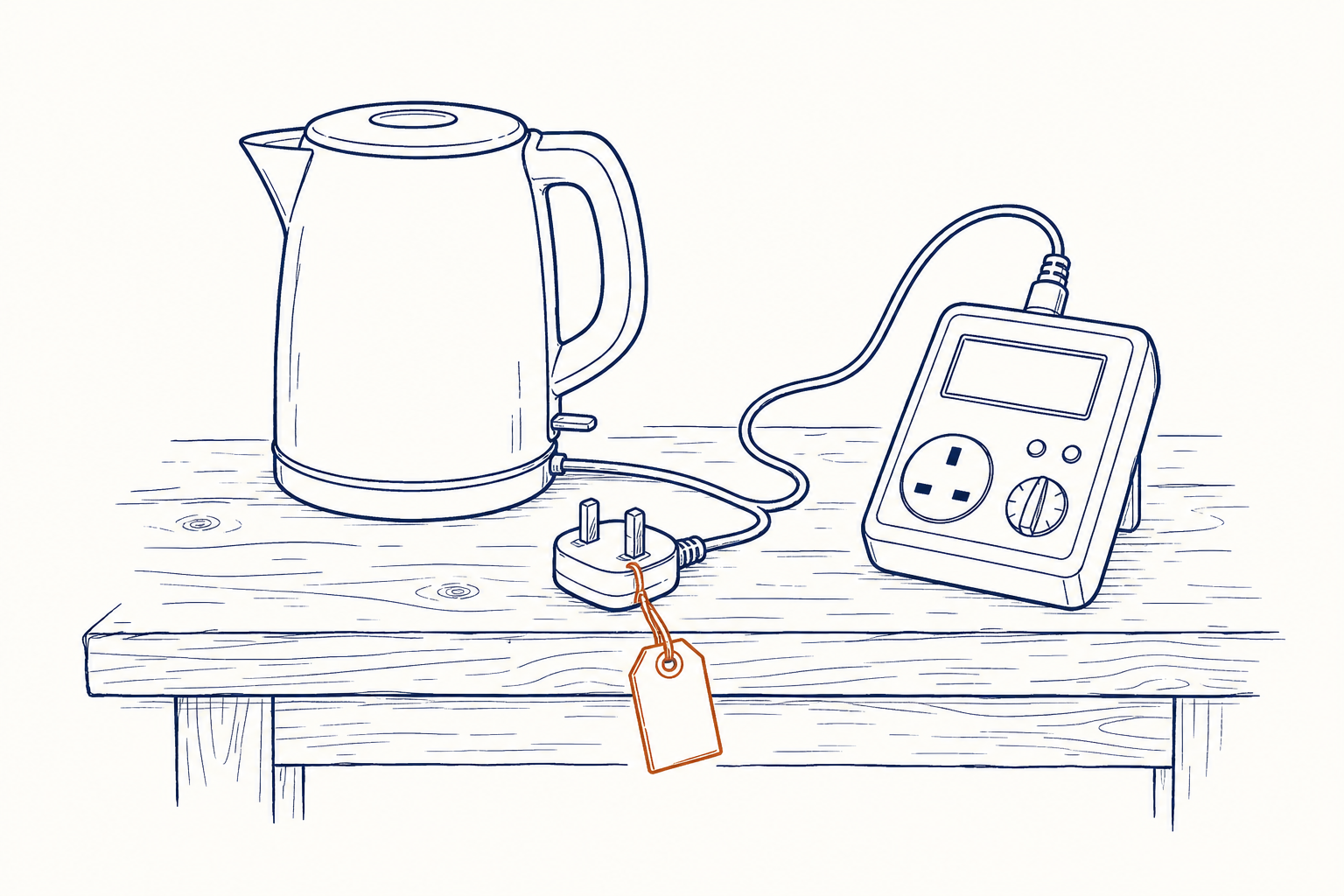
Each item gets a pass/fail sticker with the test date. Anything that fails is unplugged, labelled, and listed on the register with a short note on why.
What you receive
A written PAT register (PDF, emailed) listing every item, its location, its test result, the date tested and the next-due date. A printed copy on request. The kind of paperwork an insurance assessor, Airbnb compliance reviewer or school auditor will accept without follow-up questions.